← Back to case studies
PICKL FlexKapG
Your data, your business: how insurance broker Harald Pickl used MAKLAR to work on his own terms
INDUSTRY
Insurance
EMPLOYEES
2

When things run the way they always have, most service providers never stop to ask where their client data actually lives, who owns it, or what they can realistically do with it. Everything feels accounted for. It is only when something changes — a succession, a sale, a shift in partnerships — that the question becomes urgent: what actually gives this business its value? And the answer, almost every time, is the same. The client relationships. The client data itself. Complete, and independent of any single provider.
For Harald Pickl, an independent insurance broker at PICKL FlexKapG in Pasching/Traun, Upper Austria, that moment of change arrived after many years as a distribution partner with Allianz. His professional situation was about to shift. With it came the question that surfaces for many founders in exactly these moments: where is my data? And how do I work with it, regardless of what comes next?
The real problem was not which broker software to choose next. It was what would happen when that choice needed to change again. When Harald had to make his decision, he did not yet know what his next step would look like. That made it impossible to simply wait for "the right solution." Any vendor-tied software would have put him into a new dependency. And in the event of a succession, a sale, or a partner change, that is precisely what a broker's business value cannot afford to lose.
The operational reality of a solo broker added pressure. Clients, direct contracts, third-party contracts, claims, and documents cannot be managed indefinitely through memory and spreadsheets — especially not during a transition where you are simultaneously figuring out what comes next.
Rather than opening with a list of features, kwapso started by mapping how Harald actually works: how a new client gets onboarded, how contracts and claims take shape in practice, where the work stalls. That process analysis made one thing clear. The right solution was not a tool tied to any specific insurer. It was a platform where Harald's data stays with Harald, independent of any provider. This is what kwapso calls data sovereignty. It comes up repeatedly in situations where succession, sale, or a shift in partnerships is in the picture.
The strategy that followed: build a standalone system before it is even clear where Harald's business is headed. That app is now part of MAKLAR, kwapso's broader solution for independent insurance brokers, developed through exactly these kinds of projects.
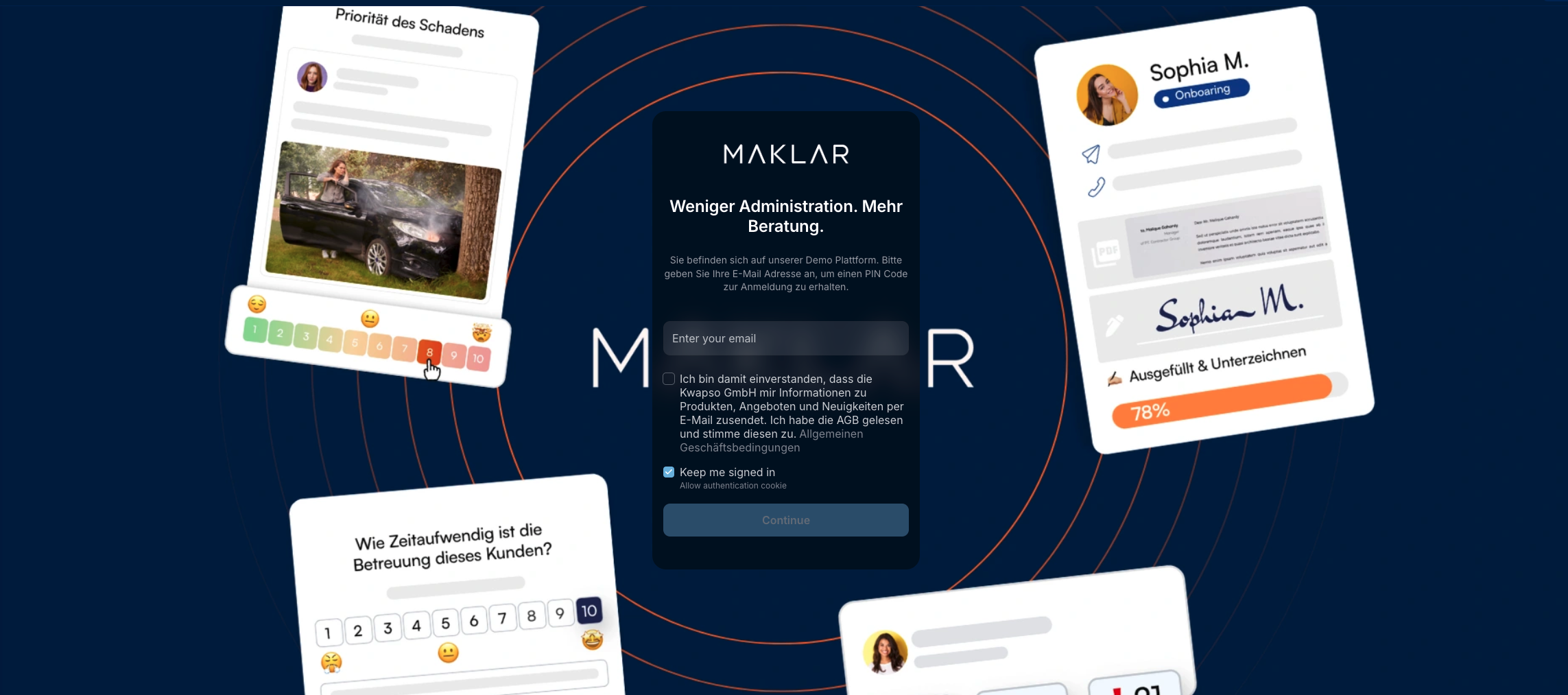
The build did not try to do everything at once. The first priority was getting what mattered out of inboxes, paper trails, and memory and into a single structured view. Clients. Contracts. Claims. Only after that came simplifications: consistent list views, clear data structure. Automation like automatic client emails, reminder tasks came deliberately last, so the foundation was solid before anything ran on its own.
That sequence mattered. Harald's business situation was itself still evolving during the build. The system needed to be robust enough to grow with him, regardless of which partner he ended up working with.
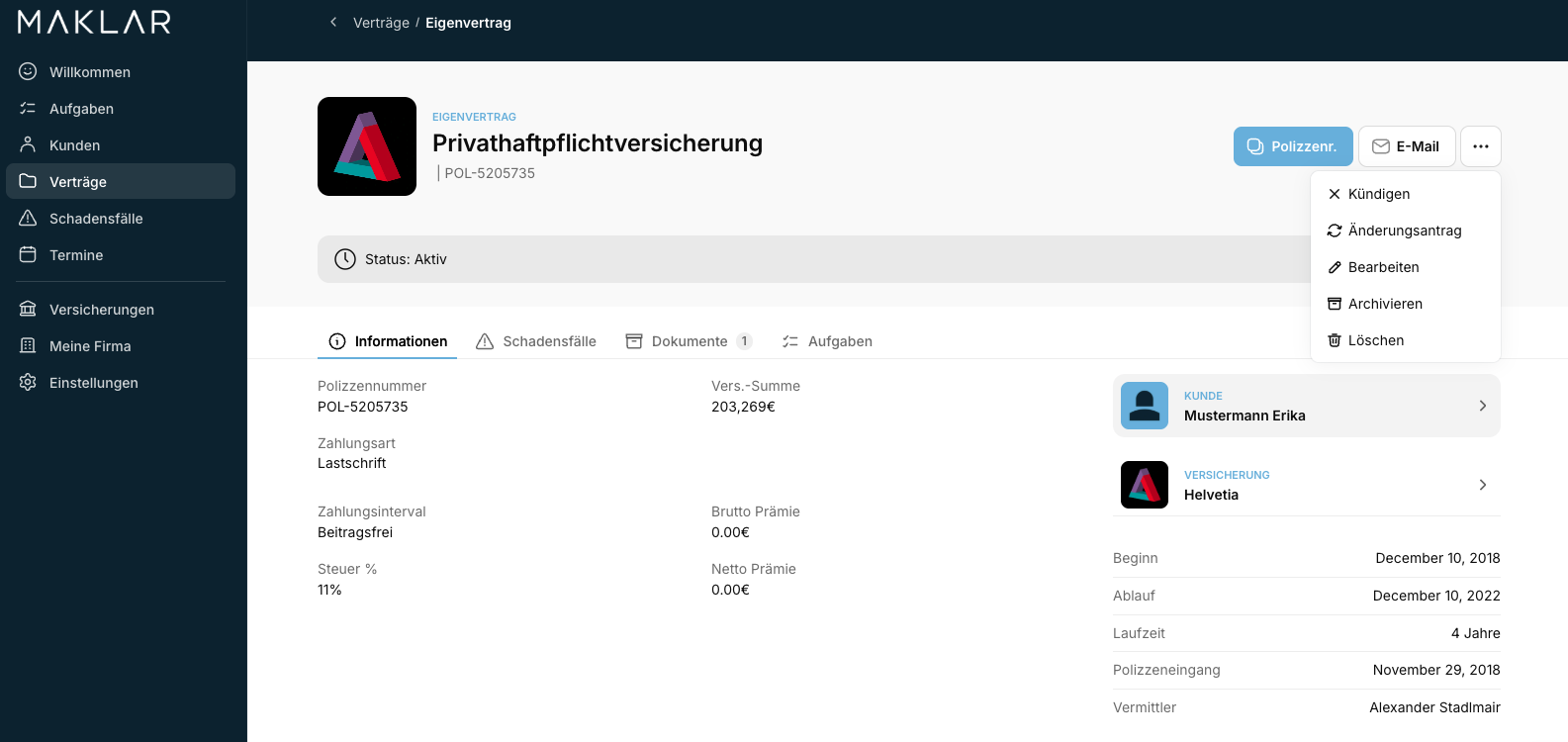
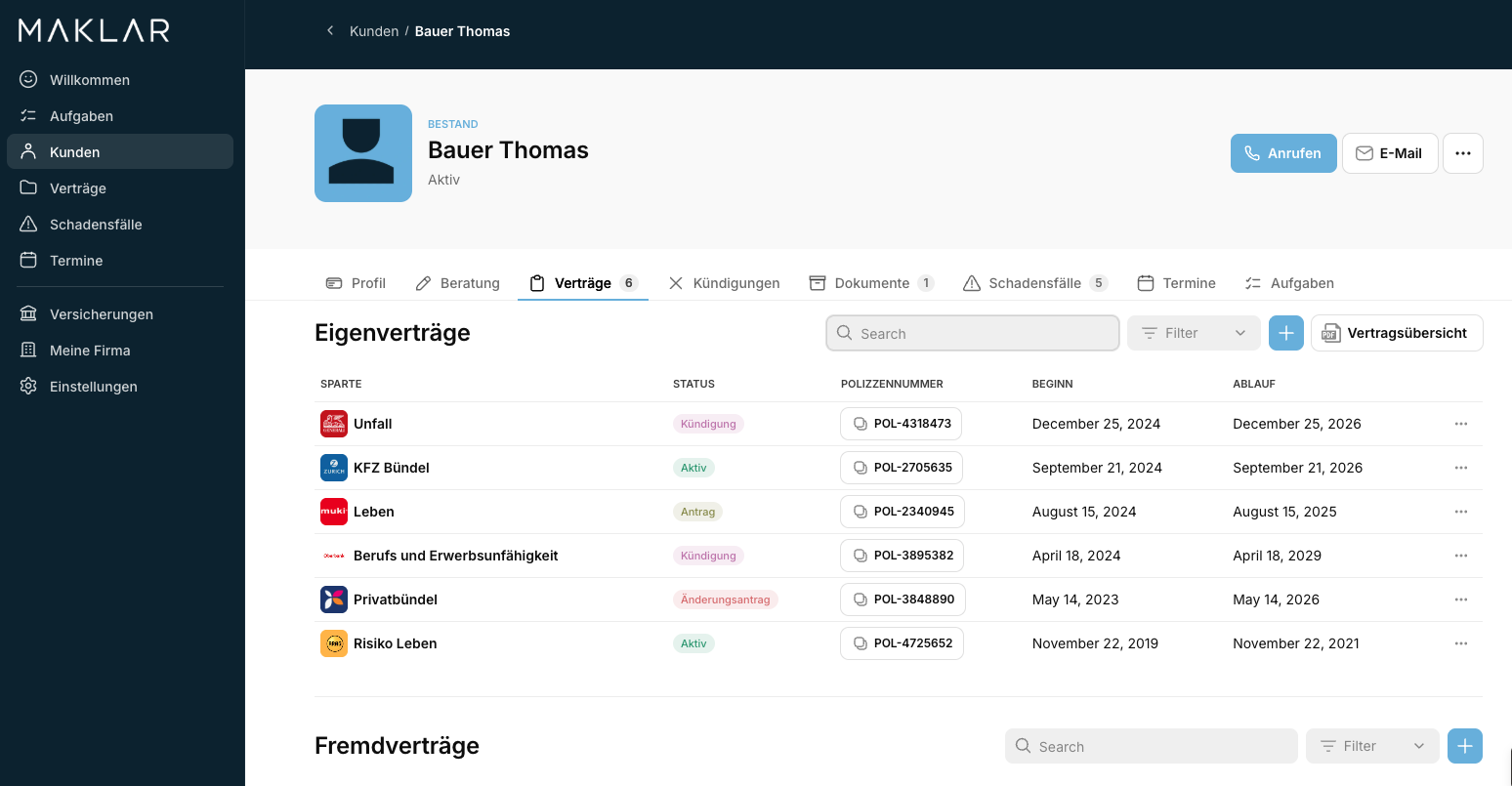
The first sprint delivered a deliberately simple version. Client management, claims, and contracts, with early automation built in: automatic client emails, document delivery. Not an off-the-shelf product, but an app built to the exact shape of how Harald works — and owned by him. Usable alongside whatever system a future partner might require.
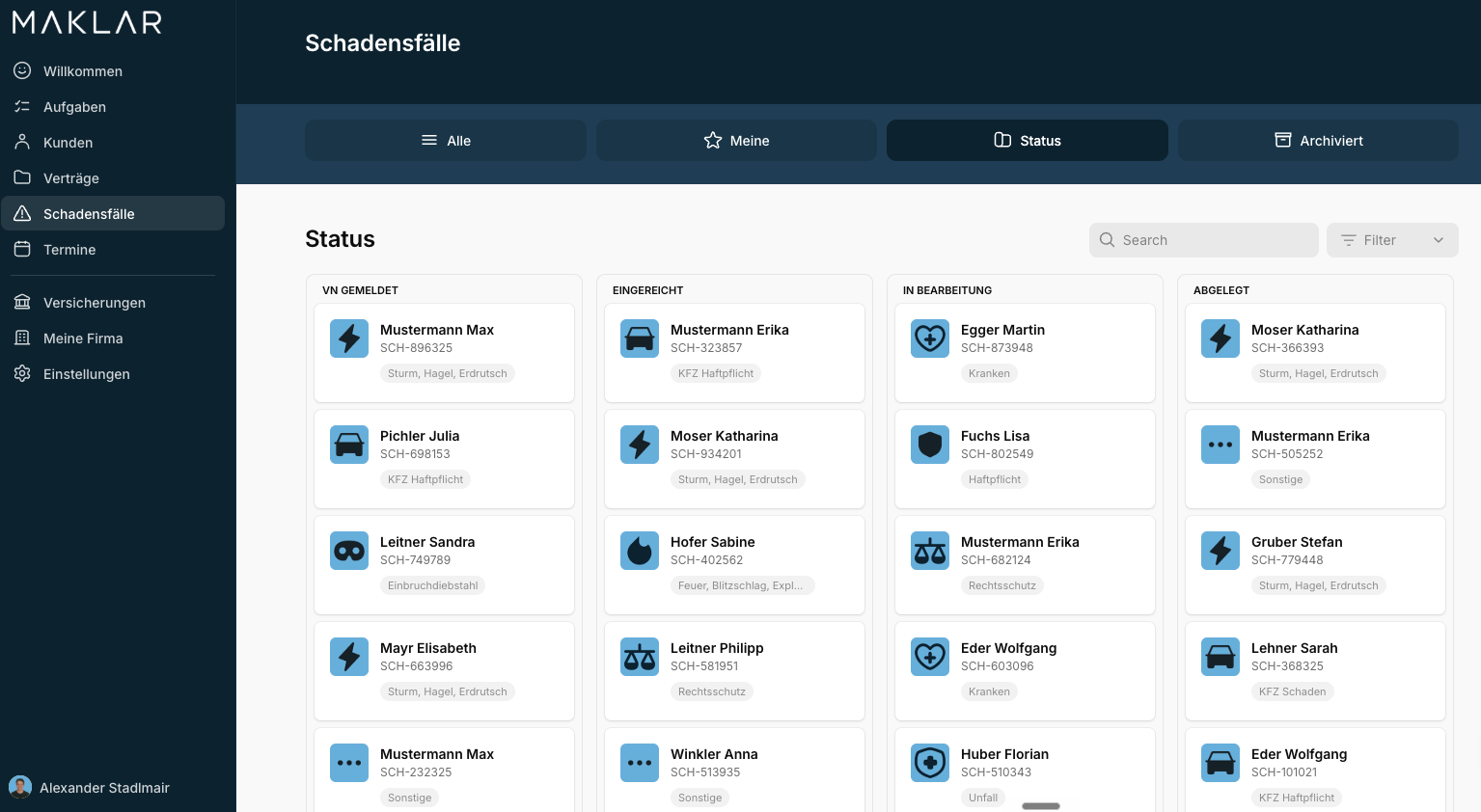
The core logic of that build clients, direct and third-party contracts, claims, documents, and automation, is now available as a standalone SaaS solution for independent insurance brokers under the name MAKLAR.
What started lean has grown through regular sprints, each one prompted by a real bottleneck in Harald's daily work. The claims form expanded to include details on parties involved, police reports, and alcohol or drug involvement, with automatic follow-up reminders at 7 and 14 days, and a dedicated task at 11 months to trigger the expert assessment process for accident insurance policies.
Claims notifications now go automatically to the relevant insurer and, at the same time, as a confirmation to the client, complete with the signed authorization and policy details as an attachment.
Beyond that: document notifications via template email, full bidirectional linking between individuals and companies, new insurance categories added on an ongoing basis (from photovoltaic to bicycle to hearing aid coverage), customizable and filterable contract views, and a full CSV export of all client and contract data.
What started as a simple first version is now the app Harald uses every day for his clients, contracts, and claims — independent of whichever partner he is currently working with. When he made the transition away from Allianz, he managed it through his own system without giving up control of his data. Claims handling, document delivery, and client communication now run automatically rather than through manual emails. Of the 40+ extensions built together, the majority are already live.
This app is now part of MAKLAR, kwapso's standalone solution for independent insurance brokers. Click on the link for a free demo that shows what this looks like for other brokers.